

Few companies have captured the public imagination quite like SpaceX. Founded by the enigmatic and divisive Elon Musk in 2002, with the lofty ambition of colonising Mars, the company has transformed the commercial space industry. Through its subsidiaries, it:
- Designs, builds and launches rockets,
- Its Starlink division provides a satellite-based global broadband network, increasing coverage and reducing dependence on traditional broadband networks.
- It provides secure satellite communications for the military and national security.
- Is heavily involved in the AI arms race, including plans to put data centres in space to reduce energy consumption.
For years, investors have speculated about when SpaceX might become a publicly traded company. They will get their chance when it floats on the Nasdaq on the 12th June with an estimated initial value of $1.8bn. Many retail investors, tempted by the media hype and Musk’s track record with Tesla, will understandably want to buy shares as soon as they become available.
But should they? Before doing so, it is worth looking at why companies choose to list on stock markets, and what history tells us about highly anticipated IPOs.
Why do companies go public?
An Initial Public Offering, or IPO, is the process by which a private company sells shares to the public and becomes listed on a stock exchange.
Companies choose to list for a variety of reasons:
- To raise money for future expansion
- To allow early investors and employees to sell some of their shares
- To increase their public profile
- To create a liquid market for ownership of the business
For investors, an IPO provides access to businesses that were previously available only to founders, employees and private equity investors. It is the opportunity to own and participate in some of the great companies of the world.
However, there is an important distinction between a great company and a great investment. By the time a company reaches the stock market, its strengths are usually well known. Investors are often paying not just for what the business is today, but for what they believe it could become in the future.
That perception can create a significant gap between expectations and reality. As with any product or service, the price of a share changes with demand and supply: high demand and low supply, the price of anything goes up. Low demand and high supply, prices fall.
For a company IPO as hyped up as Space X, a lot of the price will be based on the hype rather than on the reality of the business model. That is not to say Space X won’t become successful and make a lot of money; analysts are expecting Starlink’s revenue to grow from a current $11.39bn annual revenue to a staggering $114bn by 2030! And it’s AI and computer division to grow from $3.2bn to $322bn in that same 4 year period*. Though these projections themselves can be self-serving for the analysts that make them!
What history tells us about highly anticipated IPOs
The stock market has seen many IPOs that generated enormous excitement before launch.
Some justified the hype. Others did not.
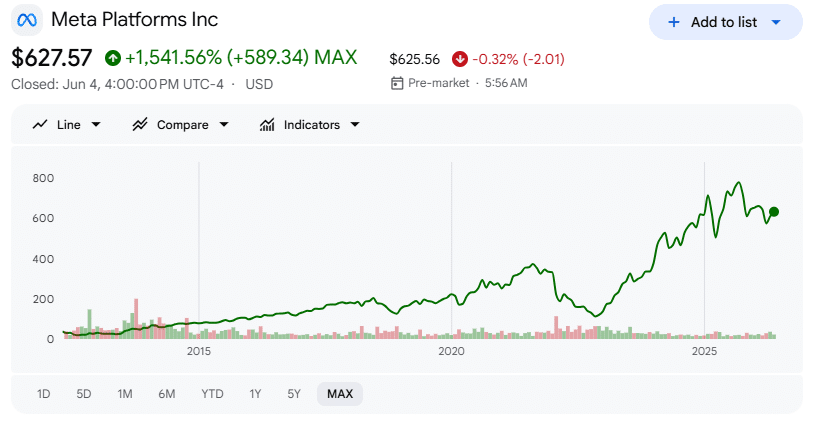
Facebook’s 2012 IPO attracted huge media attention. Expectations were extraordinarily high, yet the shares fell sharply after listing. At one stage they were down around 50% from the IPO price. Did that mean Facebook went from being a good company pre-IPO to being a bad one immediately after? No, investors who remained patient were eventually rewarded as the company grew into one of the largest businesses in the world.
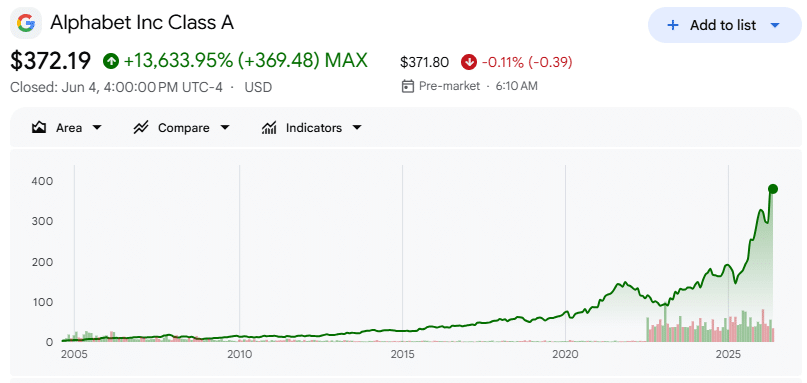
Google experienced similar scepticism after its 2004 flotation. Many commentators believed the valuation was excessive. In hindsight, it became one of the most successful investments of modern times.
There are also examples where enthusiasm ran ahead of reality.
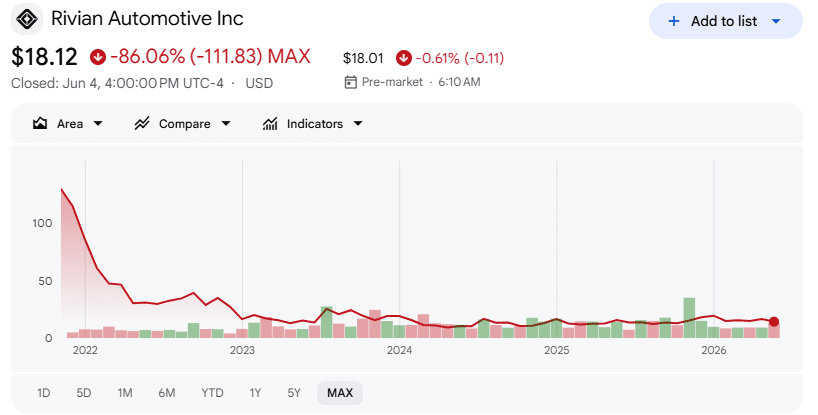
Electric vehicle manufacturer Rivian became one of the most valuable car companies in the world shortly after its 2021 IPO despite producing relatively few vehicles. As investors reassessed the challenges facing the business, the share price suffered substantial declines and is still well below the initial launch price.
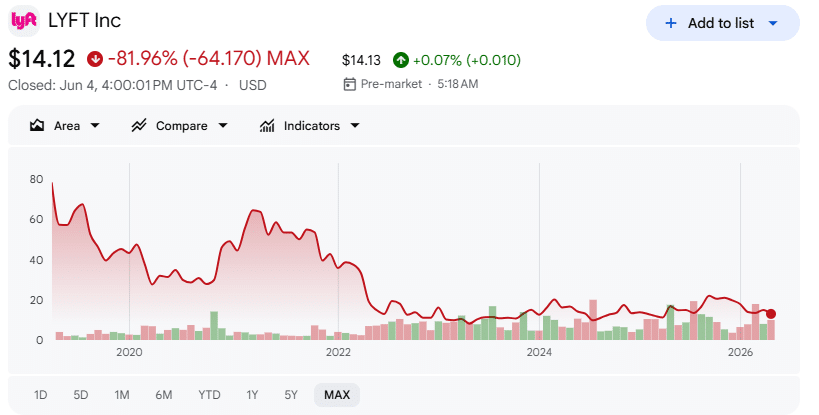
Uber’s rival, Lyft generated enormous excitement when they listed, only to experience significant volatility as investors focused on profitability rather than growth alone.
Not All IPOs are Equal
The lesson is not that exciting IPOs should be avoided. It is that excitement and investment returns are not the same thing. In fact, the more enthusiasm surrounding an IPO, the more likely it is that optimistic assumptions have already been reflected in the share price. That creates a behavioural challenge for investors.
Many people may be tempted to buy shares because:
- They admire Elon Musk
- They believe in the company’s mission
- They fear missing out
- Everyone else appears to be talking about it
None of these are investment reasons, they are emotive ones.
The danger is that investors buy based on excitement but sell based on fear. History shows that even outstanding businesses can experience substantial share price declines. A falling share price shortly after an IPO does not automatically mean the business has failed. However, investors who bought primarily because of the excitement may find it difficult to remain invested when enthusiasm fades and volatility increases.
Before investing in any IPO, it is worth asking a simple question:
“If the share price fell by 30% next year, would I still want to own it?”
If the answer is no, the investment decision may be driven more by emotion than conviction.
Single company shares carry greater risk
Investing in individual companies can be rewarding, but it inevitably involves taking on additional risk. Even the world’s most successful businesses face challenges: competition increases; regulations change; new technologies emerge; management teams make change or make strategic misjudgements.
When you invest in a single company, your investment outcome depends heavily on whether that particular business succeeds. This is why many investors view individual shares as suitable for a relatively small portion of their wealth; money that can be invested speculatively without affecting long term financial security if things do not work out as expected.
You may own SpaceX without buying SpaceX
For most people, retirement plans and lifestyle goals are better supported by diversified portfolios rather than concentrated bets on individual companies. One of the overlooked benefits of global index investing is that companies naturally become part of the portfolio once they list, or as they grow and become part of an index such as the FTSE100 or S&P500. Investors participate in the success of thousands of companies around the world, including future market leaders as they emerge.
SpaceX may eventually become one of the defining businesses of the twenty first century. History suggests that the greatest risk surrounding a highly anticipated IPO is often not the company itself. It is the temptation to let excitement, headlines and fear of missing out drive investment decisions.
The question therefore is not whether the company is impressive, but whether buying shares fits within their financial plan.
*Source: Yahoo Finance
Charts sourced from Google Finance